Why Prototyping Services Often Outperform In-House Development Teams
Bringing a new product from concept to production is rarely straightforward. Timelines tighten. Budgets face pressure. Design revisions pile up faster than expected. For many organizations, these challenges raise a critical question early in the process: should prototyping remain in-house, or be handled by a dedicated manufacturing partner?
Across Canada, more businesses are learning that specialized prototyping services often deliver stronger outcomes than internal development teams alone. This shift is driven by efficiency, precision, and the realities of modern metal fabrication.
The Growing Complexity of Product Development
Product development no longer moves slowly. Markets demand faster iteration and greater accuracy. However, internal teams often juggle multiple responsibilities beyond prototyping.
Common constraints include:
- Limited access to dedicated fabrication equipment
- Competing priorities within engineering teams
- Longer approval cycles for tooling and process changes
- Difficulty scaling prototype output consistently
As a result, internal prototyping can slow progress rather than accelerate it.
Why Specialized Prototyping Services Support Product Development
Prototyping providers focus on one core responsibility: transforming designs into accurate, repeatable physical components. That specialization creates advantages that in-house teams often struggle to match.
1. Focused Manufacturing Expertise
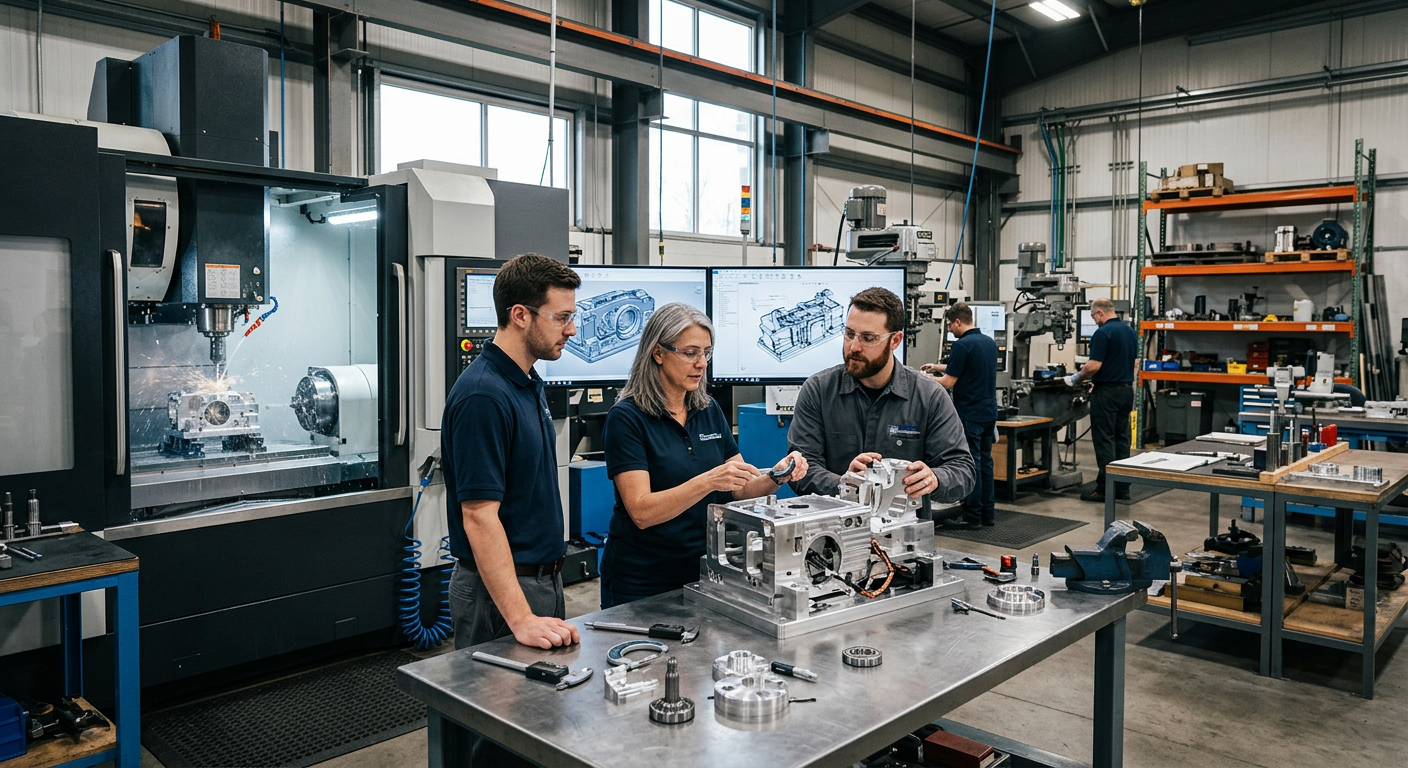
External prototyping services operate with teams trained specifically in fabrication and machining workflows. This depth of experience allows for early identification of design challenges related to manufacturability, tolerances, and material selection.
Instead of issues appearing late in development, potential problems surface early. That reduces redesign cycles and prevents downstream delays.
2. Faster Turnaround Through Dedicated Equipment
Internal teams frequently share machines across departments. Prototyping services, by contrast, schedule work specifically around prototype production.
This focused access enables:
- Shorter lead times for initial builds
- Faster revisions between prototype iterations
- Consistent output without internal scheduling conflicts
Speed matters when design decisions depend on physical testing
3. Repeatability and Process Control
Consistency is critical during prototyping. Each revision must reflect precise changes without introducing variation.
Professional prototyping environments rely on standardized processes, controlled machining methods, and documented workflows. This approach ensures that every iteration aligns closely with design intent and production feasibility.
Cost Efficiency Beyond the Surface
At first glance, in-house development may appear cost-effective. Equipment already exists. Teams are already on payroll. However, hidden costs often emerge.
These include:
- Machine downtime affects other operations
- Training requirements for specialized fabrication tasks
- Material waste from trial-and-error machining
- Delays that extend development timelines
Design Feedback That Supports Production Readiness
One of the most overlooked benefits of external prototyping is the production-oriented feedback it provides.
Experienced fabrication teams evaluate designs through a manufacturing lens. They assess whether features can be machined consistently or assembled reliably at scale.
This feedback strengthens the transition from prototype to production by aligning early designs with real-world manufacturing constraints.
Prototyping as a Strategic Advantage
Businesses that treat prototyping as a strategic function rather than a side task gain measurable advantages.
These include:
- Faster time to market
- Reduced redesign cycles
- Improved manufacturability
- More predictable development timelines
Over time, these benefits compound and strengthen overall competitiveness.
Also Read:
Enabling Medical Breakthroughs with Advanced Prototyping
From Design to Prototype: How Conceptual Ideas Become Tangible Products
What Sets Subtractive Rapid Prototyping Apart from Additive Manufacturing Methods
Choosing the Right Prototyping Partner
Not all product prototyping services offer the same capabilities. Alignment matters. Experience in metal fabrication, controlled machining processes, and repeatable workflows should guide selection.
When product development demands reliable results, focused manufacturing expertise can influence development timelines and process stability. A strong partner supports development goals without introducing unnecessary complexity.
For organizations seeking dependable custom product prototyping services in Canada, Promark Tool and Manufacturing provides fabrication-driven support that aligns prototype development with real-world production needs.
Contact reliable prototyping companies, such as Promark Tool and Manufacturing, for custom product prototyping services that support efficient, production-ready development.