Where Custom Metal Fabrication Fits Into Modern Construction Practices
Modern construction has changed significantly over the past few decades. Projects move faster. Designs are more detailed. Tolerances are tighter. As a result, construction teams increasingly rely on precision manufacturing partners to deliver components that arrive ready for installation.
Custom metal fabrication plays a practical role in this shift. It supports accuracy, consistency, and predictability across construction workflows. Aligning fabrication with construction planning reduces delays, limits on-site modifications, and improves overall build quality.
Since 1971, Promark Tool and Manufacturing has supported industries that depend on accurate, repeatable metal components. That experience provides a clear view into where custom metal fabrication fits into today’s construction practices and why it continues to matter.
How Modern Construction Practices Depend on Fabrication Precision
Construction environments demand precision long before materials reach the site. Finalization of drawings is early. Coordination between trades is tighter. Fabricated components must match design specifications without requiring adjustment during installation.
Custom metal fabrication supports this need by producing components to exact dimensions. These parts integrate cleanly with framing interfaces, mounting points, and sheet-metal enclosures.
Precision fabrication helps construction teams:
- Maintain alignment across interconnected components
- Reduce cumulative tolerance issues
- Improve the fit between the metal parts and the surrounding materials
- Support consistent installation outcomes across multiple sites
When fabrication precision is built into the process, construction workflows become more predictable.
Common Construction Applications That Rely on Custom Metal Fabrication
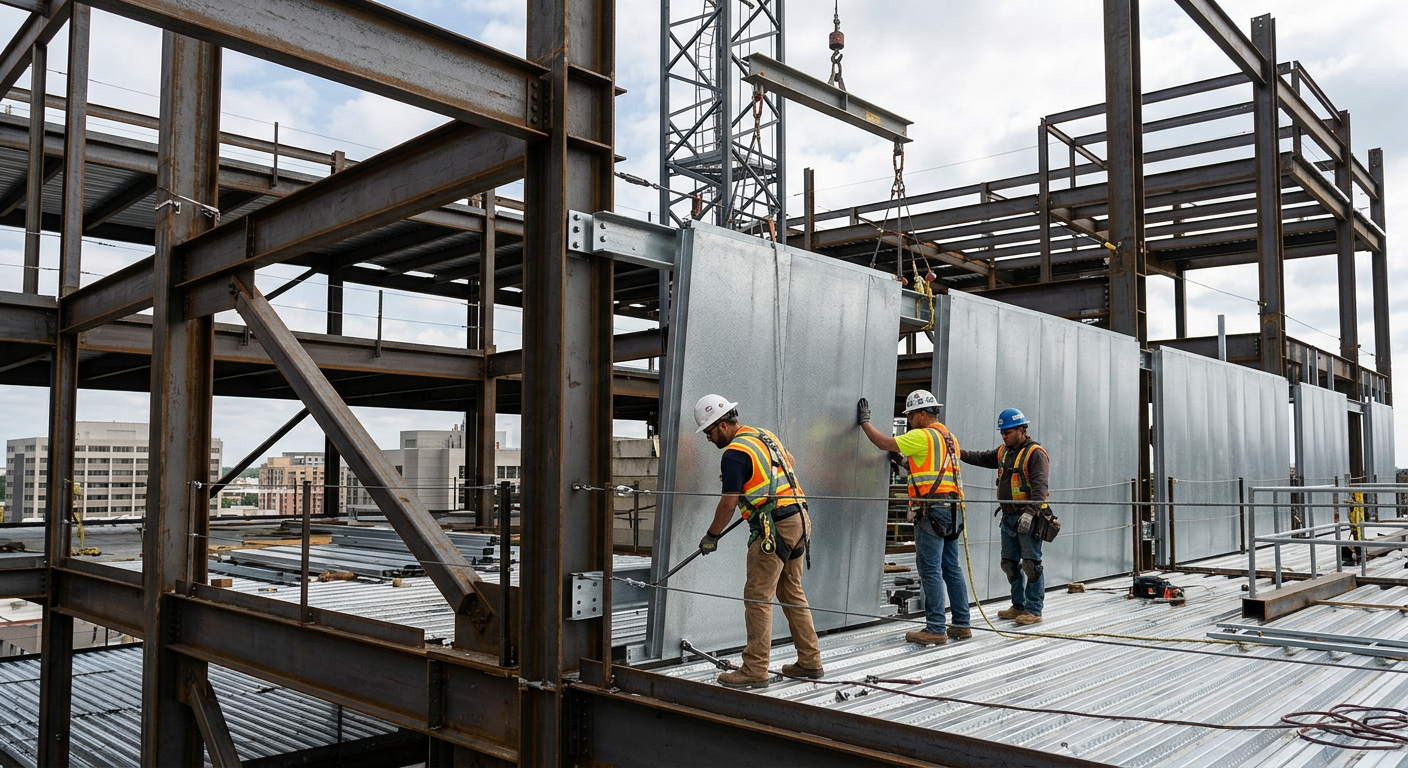
Custom metal fabrication supports a wide range of functional construction applications. These components are rarely decorative. Instead, they serve structural, protective, or integration purposes within larger systems.
Common construction-related fabrication applications include:
- Structural brackets and mounting plates
- Sheet metal enclosures for building systems
- Perforated panels for airflow or protection
- Equipment housings for indoor or sheltered environments
- Support frames used in commercial and institutional builds
These components must be manufactured consistently. They must also be produced in quantities that align with project schedules and phased construction timelines.
The Role of Fabrication in Reducing On-Site Adjustments
On-site adjustments slow projects down. They introduce risk. They also increase labour costs and scheduling pressure.
Custom metal fabrication reduces the need for on-site modifications by delivering components ready for installation. When parts arrive fabricated to specification, construction teams spend less time fitting, trimming, or reworking metal components.
This approach helps:
- Minimize installation variability
- Reduce trade coordination issues
- Limit rework caused by dimensional inconsistencies
- Support cleaner handoffs between fabrication and construction teams
Precision fabrication acts as an extension of the construction planning process rather than a reactive step.
Integration With Construction Design and Planning Workflows
Fabrication delivers the most value when integrated early in construction planning. Custom tool manufacturers and fabricators work from finalized drawings, detailed specifications, and defined tolerances.
This integration allows fabrication teams to:
- Identify manufacturability considerations early
- Align fabrication methods with design intent
- Support consistent output across repeated builds
- Reduce last-minute design changes
Custom metal fabrication supports construction planning by turning design intent into physical components without introducing uncertainty.
Why Custom Fabrication Supports Faster Project Timelines
Construction schedules depend on coordination. Delays in one area ripple through the entire project. Fabrication delays can stall installation, inspections, and subsequent trades.
Custom metal fabrication supports faster timelines by offering:
- Predictable production schedules
- Repeatable part quality across batches
- Reduced dependency on on-site fabrication
- Streamlined delivery aligned with project phases
By fabricating components accurately and delivering them on time, construction teams can maintain momentum and meet project milestones more reliably.
Material Selection Considerations for Construction Environments
Material selection plays a practical role in construction-related fabrication. Metals are chosen for durability, formability, and long-term performance in the built environment.
Fabrication for construction commonly focuses on:
- Steel and aluminum grades suited for structural and enclosure applications
- Materials compatible with fastening and mounting systems
- Metals that perform reliably under routine building conditions
Material choices are driven by application requirements rather than novelty. The goal is to ensure consistency, availability, and performance throughout the structure’s life.
Also Read:
Understanding Different Stages in Custom Metal Fabrication
A Guide to Promark’s Single-Source Metal Fabrication Services
Why Quality Control Matters in Custom Sheet Metal Fabrication
Fabrication as a Practical Partner in Modern Construction
Modern construction relies on precision beyond the job site. Custom metal fabrication supports that precision by delivering components that fit, perform, and integrate as intended.
CNC-machined metal components serve as supporting elements in construction workflows. It is a supporting function that enables smoother execution across planning, installation, and long-term use.
When fabrication partners understand construction workflows, their role becomes clearer:
- Deliver components that install without modification
- Support repeatable outcomes across projects
- Reduce risk associated with dimensional errors
- Align production with construction timelines
This practical alignment is where fabrication adds the most value to modern construction practices.
When fabrication is treated as a practical partner in construction planning, it reduces friction across the build process. It also supports safer, faster, and more predictable project execution.
Promark Tool and Manufacturing continues to support construction-related fabrication needs with a focus on accuracy, repeatability, and long-term reliability. To discuss construction-related metal fabrication in Toronto, contact Promark Tool and Manufacturing.