How Strong Quality Control Shapes Reliable Custom Metal Stamping Results
Manufacturers that depend on precision metal components know that consistency is everything. A single deviation in tolerance can affect assembly alignment, equipment performance, and product reliability.
For businesses that rely on custom metal stamping, strong quality control practices are essential.
Quality control does far more than catch defects after production. It influences the entire manufacturing lifecycle, from tooling preparation and material verification to in-process monitoring and final inspection. When every stage follows clear quality procedures, stamping operations produce consistent components.
Organizations across Canada increasingly evaluate quality systems when selecting a stamping partner. Structured quality management ensures stamped parts meet dimensional expectations, maintain consistency across production runs, and support demanding industrial applications.
Structured quality control plays a central role in maintaining consistent results in custom metal stamping.
Why Quality Control Matters in Custom Metal Stamping
Metal stamping transforms flat metal sheets into precise shapes using specialized dies and presses. While the process can produce high volumes efficiently, the accuracy of each part depends heavily on quality oversight.
Without strong quality controls, stamping operations may encounter problems such as:
- Dimensional inconsistencies between production runs
- Misaligned or worn tooling that affects part geometry
- Surface defects that affect downstream assembly
- Material inconsistencies that compromise performance
Structured inspection systems reduce these risks by monitoring production conditions and maintaining manufacturing standards.
Structured manufacturing practices also support:
- Repeatable manufacturing outcomes
- Lower scrap rates and reduced rework
- Reliable integration with downstream assembly processes
- Confidence for businesses that rely on consistent metal components
For organizations that source stamped components, quality systems are the foundation of dependable production.
Quality Begins at Tooling and Die Design
In custom metal stamping operations, the quality of the final components reflects the precision of the tooling used to produce them.
Tooling and die systems must maintain tight tolerances over thousands or even millions of production cycles. Small variations in die alignment or tool wear can affect the shape and consistency of stamped parts.
Effective quality control begins with careful tooling design and preparation. Key considerations typically include:
- Accurate die alignment to ensure proper part geometry
- Durable tooling materials capable of sustaining production loads
- Precision machining of tooling components using reliable equipment
- Scheduled inspection and maintenance of dies to prevent wear-related issues
Advanced fabrication environments frequently use 3-axis CNC machining to produce tooling components with consistent dimensional accuracy. This machining approach supports stable tooling performance across long production runs.
By focusing on tooling precision at the beginning of the process, manufacturers establish a strong foundation for reliable stamping results.
Material Verification and Traceability
Another critical element of quality control involves verifying incoming materials before they enter production.
Metal sheets used in stamping must meet specific thickness, composition, and performance requirements. Variations in raw material properties can influence forming behaviour, part strength, and surface finish.
Quality systems typically include structured material verification steps such as:
- Confirming material specifications against supplier documentation
- Inspecting sheet thickness and flatness
- Recording batch identification for traceability
- Documenting material origin and certification data
Traceability becomes especially important for industries that require documented quality records. By tracking materials throughout production, manufacturers maintain accountability and provide clear documentation for future audits or inspections.
Material verification ensures that stamping operations begin with consistent inputs, reducing the likelihood of downstream production issues.
In-Process Quality Monitoring During Stamping
Quality control does not stop once production begins. Continuous monitoring during stamping operations helps detect small deviations before they become larger problems.
In-process inspection methods often include:
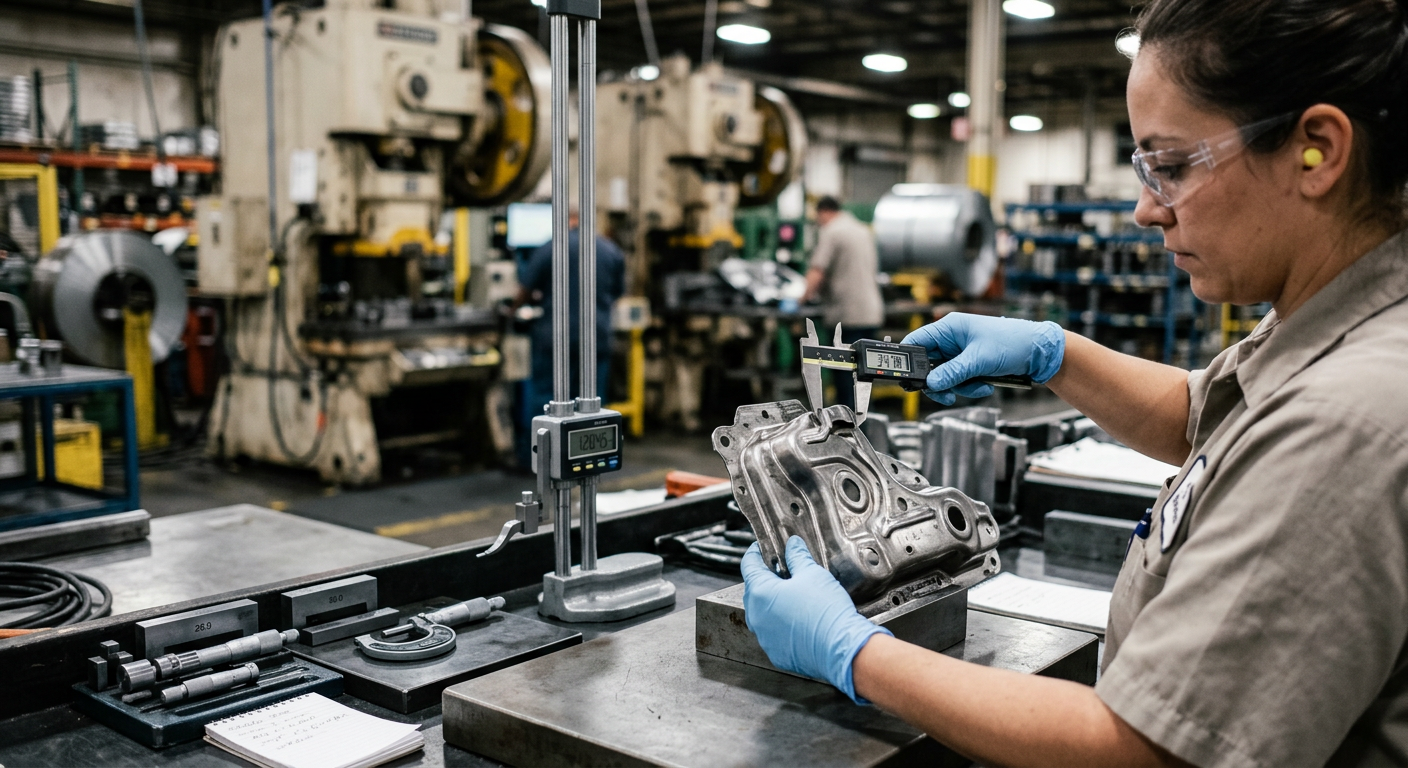
- Periodic dimensional checks of stamped components
- Monitoring press alignment and tooling performance
- Tracking part measurements at defined production intervals
- Observing surface quality and edge conditions
These monitoring activities allow production teams to identify trends and make adjustments when needed.
For example, if early measurements show slight dimensional drift, technicians can evaluate tooling alignment before issues affect larger production quantities.
This proactive approach improves process stability and reduces the risk of producing large volumes of non-conforming parts.
Post-Stamping Inspection and Validation
After stamping operations conclude, finished components undergo additional inspection to verify that they meet established specifications.
Post-production quality checks in metal stamping companies typically include:
- Dimensional inspection using calibrated measuring tools
- Surface condition evaluation to identify defects
- Confirmation that part geometry matches design specifications
- Verification of batch records and traceability documentation
These inspection procedures help confirm that production outputs align with manufacturing requirements.
In many fabrication environments, inspection results are documented to support quality audits and customer reporting requirements.
Consistent inspection practices strengthen quality accountability and help maintain long-term production reliability.
How Strong Quality Systems Reduce Production Risk
Production quality procedures do more than maintain consistency. It also protects businesses from operational risk.
When stamped components fail to meet specifications, the consequences can extend far beyond production delays. Inconsistent parts may affect equipment reliability, disrupt supply chains, or create compliance challenges.
Strong quality systems help reduce these risks by
- Detecting issues early in the production process
- Maintaining consistent part dimensions across batches
- Supporting traceability and documentation requirements
- Reducing scrap and rework costs
Manufacturers that depend on stamped components often prioritize suppliers with structured quality systems because such practices promote stable, long-term supply
Reliable quality management ensures that stamping operations remain predictable and dependable.
What Businesses Should Evaluate in a Custom Metal Stamping Partner
Selecting a metal stamping partner involves more than evaluating equipment or production capacity. Quality systems should play a central role in supplier evaluation. Organizations that rely on stamped components frequently assess factors such as:
1. Documented Quality Procedures
Clear inspection processes and quality records demonstrate manufacturing discipline.
2. Tooling Maintenance Programs
Regular die inspection and maintenance help maintain dimensional accuracy across production cycles.
3. Material Traceability Systems
Traceability supports quality accountability and regulatory compliance.
4. In-Process Inspection Practices
Continuous monitoring reduces the likelihood of large production defects.
5. Experience in Precision Fabrication
Manufacturers with established quality systems tend to produce more consistent results.
Businesses sourcing stamped parts often value partners that combine technical expertise with strong process control.
Also Read:
The Critical Role of Metal Stamping in the Medical Industry
How Modern Metal Stamping Enhances Product Functionality?
Mastering Metal Stamping: Progress, Cost Reduction, and Innovation
Quality Control Is the Foundation of Reliable Metal Stamping
Custom metal stamping plays an essential role in modern manufacturing. However, the reliability of stamped components depends heavily on the strength of the quality control systems that guide production.
From tooling preparation and material verification to in-process monitoring and final inspection, quality oversight influences every stage of fabrication. When these systems function effectively, stamping operations produce components that meet strict dimensional expectations and remain consistent across production cycles.
Manufacturers relying on precision metal components increasingly recognize the importance of working with fabrication partners that maintain disciplined quality practices.
Organizations seeking dependable stamping solutions can contact Promark Tool and Manufacturing for reliable custom metal stamping in Canada.