
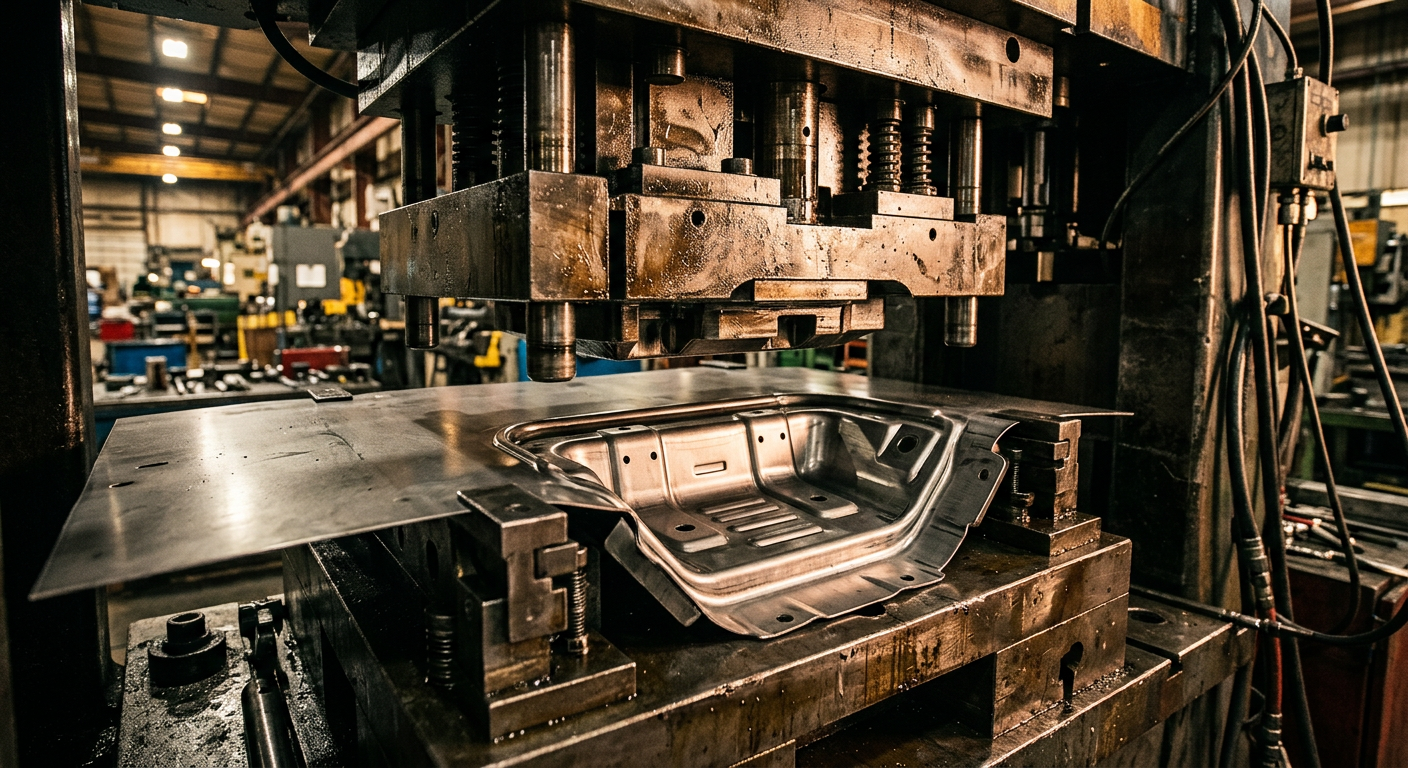
How Metal Stamping Is Foundational to Mass-Produced Consumer Goods
Mass-produced consumer goods depend on consistency. Whether components support electronics, appliances, infrastructure hardware, or industrial systems, repeatability and precision are critical to success at scale. This is where metal stamping services play a foundational role in scalable manufacturing.
Across Canada’s manufacturing landscape, metal stamping remains one of the most reliable methods for producing high volumes of components. Its efficiency, accuracy, and scalability continue to support modern production demands across multiple sectors.
Understanding how metal stamping supports mass production clarifies why this process remains central to consumer goods manufacturing.
What Metal Stamping Is and Why It’s Widely Used
Metal stamping is a manufacturing process that uses dies and presses to cut, form, and shape flat metal sheets into precise components. After tooling is established, the process delivers consistent results at high production volumes.
Metal stamping is widely used because it offers:
- High repeatability across large runs
- Tight dimensional control
- Efficient material usage
- Compatibility with downstream processes
These advantages make metal stamping services especially valuable when production demands predictability and long-term consistency.
Everyday Products That Commonly Begin With Metal Stamping
Many everyday consumer goods rely on stamped metal components, even if those components are not visible in the finished product.
Common examples include:
- Internal brackets and frames
- Electrical contact components
- Shielding and enclosure elements
- Structural supports inside assemblies
In many cases, these stamped parts serve as the foundation for subsequent manufacturing steps. Their accuracy directly affects downstream assembly and overall product performance.
Why Metal Stamping Makes Sense Early in the Manufacturing Process
Introducing metal stamping early in the manufacturing process provides clear advantages. Upfront tooling decisions enable production teams to design around realistic tolerances and proven forming methods.
Early adoption of the custom metal stamp in Canada supports:
- Stable cost forecasting
- Reduced production variability
- Faster transition to volume manufacturing
- Fewer design changes later
By defining component geometry early, manufacturers avoid redesign cycles that often occur when forming limitations are discovered too late.
Material Flexibility That Supports Product Design
Metal stamping supports a range of commonly used industrial metals that balance strength, formability, and availability. This flexibility allows design teams to select materials that align with both functional requirements and production efficiency.
Stamped components are often produced using metals that:
- Maintain consistent thickness
- Form predictably under pressure
- Support long-term supply continuity
This balance allows product designs to scale without introducing unnecessary complexity into the manufacturing process.
How Metal Stamping Supports Design for Manufacturability (DFM)
Design for Manufacturability (DFM) focuses on creating parts that are easier to produce without sacrificing performance. Most reliable metal stamping companies naturally align with this principle.
Well-designed stamped components:
- Reduce secondary machining requirements
- Simplify assembly alignment
- Improve repeatability across production runs
- Lower overall manufacturing risk
Stamping constraints also encourage disciplined design decisions. This results in components that perform reliably in real-world production environments.
Also Read:
The Role of Metal Plating in Enhancing Stamped Part Durability
The Impact of Material Selection on Metal Stamping Outcomes
Which Raw Materials Deliver the Best Results in Metal Stamping?
Why Metal Stamping Remains a Manufacturing First Step
Metal stamping remains a core manufacturing process because it delivers consistency at the component level, where production stability begins. For manufacturers producing consumer goods at scale, it continues to support efficient production, disciplined design, and long-term reliability.
Despite advances in manufacturing technology, stamping processes remain a first step in producing many mass-produced consumer goods. Its value lies in its balance of precision, efficiency, and scalability.
When stamping is integrated early:
- Production planning becomes more predictable
- Quality control improves across batches
- Manufacturing workflows remain stable over time
At Promark Tool and Manufacturing, metal stamping has remained a core capability since 1971. That longevity reflects the process’s ongoing relevance in modern manufacturing.
Contact Promark Tool and Manufacturing to discuss how custom metal stamping supports repeatable, large-volume component production.