
How to Choose the Right Prototyping Services for Low-Volume Manufacturing Success
Delays in early-stage production often begin with one overlooked decision: selecting the wrong prototyping approach. When prototypes fail to reflect real manufacturing conditions, issues surface later, impacting timelines, cost control, and part consistency.
For businesses relying on metal fabrication, prototyping is not just about creating a sample. It is about validating manufacturability, repeatability, and performance before scaling. Choosing the right prototyping services directly shapes the success of low-volume manufacturing.
People Also Ask (PAAs)
What is the role of prototyping in low-volume manufacturing?
Prototyping validates design feasibility, material performance, and production processes before manufacturing begins. It helps reduce errors, improve consistency, and ensure smoother transitions into low-volume production.
How do prototyping services improve manufacturing efficiency?
Prototyping identifies design and process issues early. This reduces rework, minimizes material waste, and supports faster production readiness with consistent part quality.
What Prototyping Services Should Deliver Beyond a Physical Model
Effective prototyping goes far beyond producing a visual or functional sample. It should act as a bridge between design intent and real-world production.
A strong prototyping process should deliver:
- Manufacturing Feasibility Validation: Ensures designs can be produced using actual fabrication methods.
- Material Behaviour Insights: Confirms how selected metals perform during machining and forming.
- Tolerance and Fit Verification: Identifies alignment issues before production begins.
- Repeatability Assessment: Confirms whether the part can be produced consistently in batches.
Addressing these factors early reduces production risk and keeps project timelines stable.
Key Factors to Evaluate When Choosing Prototyping Services
Not all prototyping service providers offer the same level of manufacturing alignment. Careful evaluation helps ensure that prototypes reflect real production outcomes.
Important factors include:
- Process Alignment with Final Production: Prototypes should be created using methods that mirror actual fabrication processes, such as CNC machining or metal stamping.
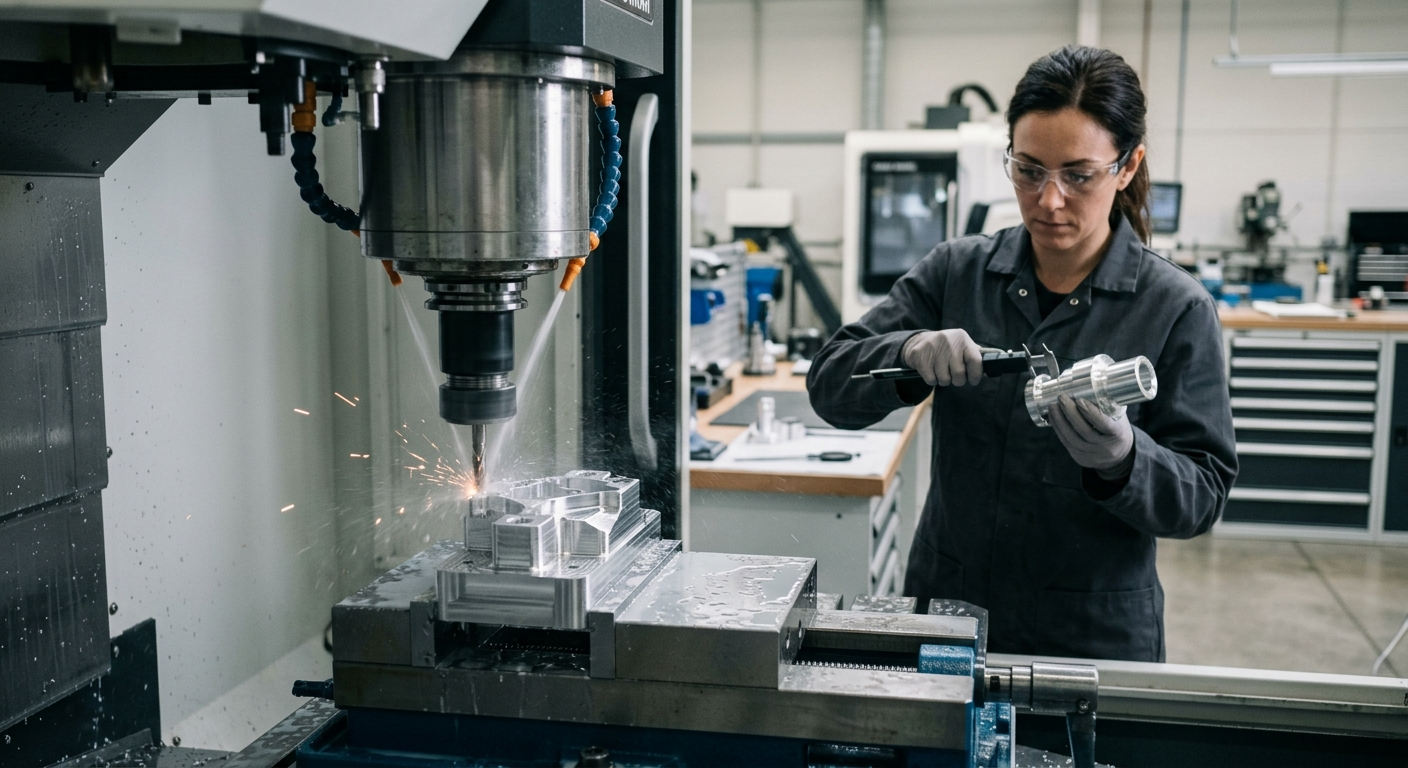
- Equipment Capabilities: Providers with reliable 3-axis CNC machining can deliver consistent, precise results for many industrial components.
- Experience with Metal Components: Knowledge of sheet-metal fabrication and machining improves accuracy and reduces the need for revisions.
- Quality Control Systems: Structured inspection processes ensure prototypes meet dimensional and functional requirements.
- Scalability for Low-Volume Runs: The transition from prototype to limited production should be seamless.
These elements help ensure that prototypes are not isolated outputs but part of a structured manufacturing workflow.
Common Mistakes When Selecting Prototyping Services
Many production challenges can be traced back to early prototyping decisions. Avoiding common missteps improves long-term outcomes.
Frequent issues include:
- Choosing Based on Speed Alone: Fast turnaround without manufacturing validation often leads to rework.
- Ignoring Production Constraints: Designs that cannot be replicated in actual fabrication create delays later.
- Overlooking Tolerance Requirements: Small deviations can affect assembly and performance.
- Relying on Disconnected Vendors: Separate providers for prototyping and production can introduce inconsistencies.
- Assuming All Materials Behave the Same: Different metals respond differently during machining and forming.
Addressing these risks early supports smoother transitions into manufacturing.
How Prototyping Services Support Low-Volume Manufacturing
Low-volume manufacturing requires precision, consistency, and flexibility. Prototyping plays a central role in achieving these outcomes.
Well-executed prototyping supports:
- Reduced Production Errors: Issues are identified before full-scale fabrication begins.
- Improved Cost Control: Fewer revisions reduce material waste and labour costs.
- Faster Production Readiness: Validated designs move into manufacturing with fewer delays.
- Consistent Part Quality: Repeatable processes ensure uniform results across batches
For metal components, this alignment is essential when moving from concept to limited production runs.
What to Look for in a Prototyping Company
Selecting the right prototyping company requires more than reviewing capabilities. It involves understanding how the provider approaches manufacturing as a whole
A reliable prototyping partner should offer:
- Integrated Fabrication Knowledge: Experience across machining, stamping, and fabrication processes.
- Structured Production Workflows: Clear processes that connect design, prototyping, and manufacturing.
- Capability in Simple Electromechanical Assemblies: Straightforward, repeatable assemblies that support functional validation.
- Experience with Regulated Components: Familiarity with producing components used in medical devices ensures precision and compliance.
- Consistent Communication and Technical Clarity: Clear insights into design adjustments and production feasibility.
These qualities help ensure that prototypes reflect real manufacturing conditions rather than isolated concepts.
Also Read:
Enabling Medical Breakthroughs with Advanced Prototyping
From Design to Prototype: How Conceptual Ideas Become Tangible Products
What Sets Subtractive Rapid Prototyping Apart from Additive Manufacturing Methods
When to Reassess the Prototyping Approach
Prototyping is a critical step in low-volume manufacturing. It connects design intent with real production outcomes and reduces risk across the manufacturing lifecycle.
Prototyping strategies should evolve as production demands change. Certain indicators suggest it may be time to revisit the approach.
Consider reassessment when:
- Production delays occur after initial validation
- Rework becomes frequent during low-volume runs
- Part consistency varies between batches
- Design changes continue late into production stages
Adjusting the prototyping process at the right time helps maintain efficiency and production stability.
A well-defined process from prototype manufacturing companies remains essential for businesses seeking reliable outcomes in low-volume manufacturing. Promark Tool and Manufacturing applies a structured approach to prototyping, focusing on precision metal fabrication, repeatability, and production alignment. Contact Promark Tool and Manufacturing today to learn more.